There was a time when my desk felt like a battlefield. Pens everywhere, half-used notebooks, sticky notes multiplying like they had a life of their own. I sat down to study and, before even opening a book, I already felt tired. Overwhelmed. Distracted.
What I slowly learned, through trial, error, and a bit of reading about attention and cognitive load, is that studying doesn’t start with motivation. It starts with the environment you place yourself in. The objects you touch, the colours you see, the order (or chaos) around you quietly shape how well your brain can focus.
This article isn’t a list of trendy stationery. It’s a selection of study supplies that genuinely work for me when my mind gets overstimulated easily. They’re simple, intentional, and backed by what we know about concentration, visual clutter, and mental energy. If you’re curious about the broader system behind this, I go deeper into it in my other article, which connects closely with everything you’ll read here.
One Notebook Per Subject: Clear Boundaries for a Calmer Mind
I used to have notes everywhere. Loose papers folded inside books, half-filled notebooks, random documents saved digitally and forgotten just as quickly. Nothing was in one place, and everything felt urgent at the same time. Sitting down to study meant first navigating the chaos, trying to remember where I had written what, and in which format.
Now I use one notebook per subject, and the difference is subtle but powerful. Each notebook represents a single mental space. When I pick it up, my brain knows exactly what it’s supposed to focus on.
From a cognitive perspective, this reduces what psychologists call task-switching costs. When information is clearly separated, your working memory isn’t constantly reorienting itself. You sit down, you open the notebook, and you begin.
I don’t choose anything fancy, just notebooks that feel good to touch and open flat easily. The key isn’t aesthetics for their own sake, but the sense of order they create.

Pens and Highlighters in a Limited Color Palette
Colour can be a tool or a trap.
At one point, I had every colour imaginable. Pastels, neons, glitter pens. They were beautiful and completely distracting. My notes looked lively, but my attention was scattered.
What works for me now is a limited color palette:
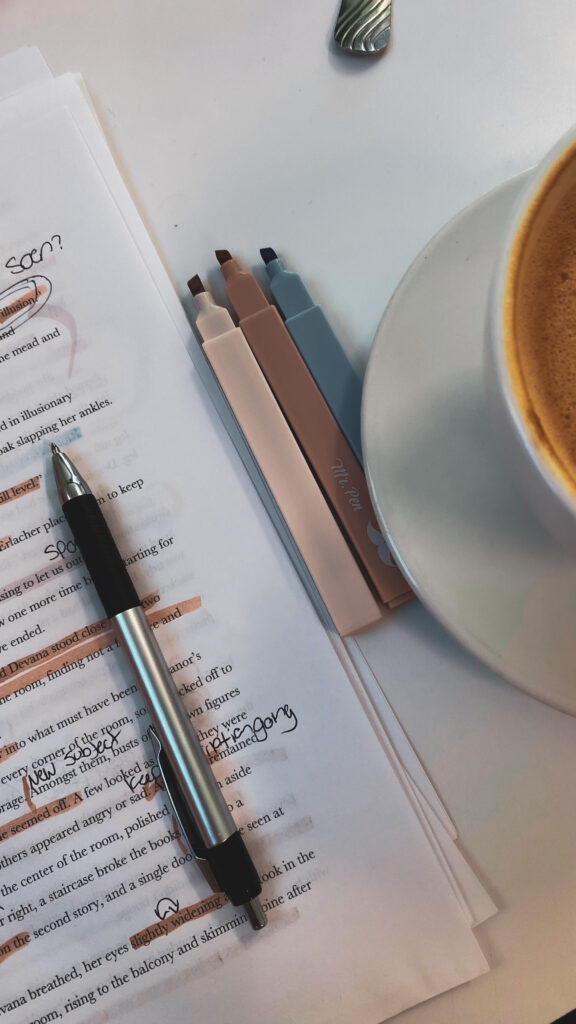
- one main pen colour
- one secondary colour for emphasis
- one or two soft highlighters
Research on visual attention shows that too many contrasting colours compete for cognitive resources. A restrained palette does the opposite: it guides the eye instead of overwhelming it.
When I look at my notes now, they feel quieter. And in that quiet, I can actually think.
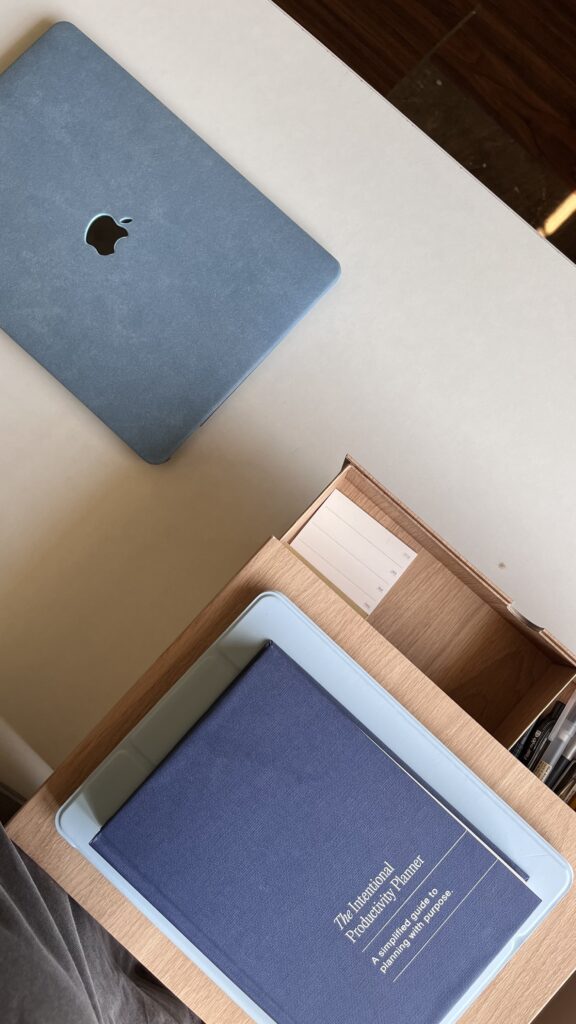
A Simple Planner That Doesn’t Demand Attention
I’ve tried elaborate planners with hourly breakdowns, trackers, and prompts. They promised control. What they gave me was pressure.
These days, I rely on a simple planner, one that asks very little of me. Just space for tasks, deadlines, and brief notes.
This aligns closely with what productivity research suggests: external systems should support cognition, not replace it or overload it. A planner is there to hold information so your brain doesn’t have to.
If you’re easily overwhelmed, the best planner isn’t the most complete one. It’s the one you’ll actually open every day without resistance.
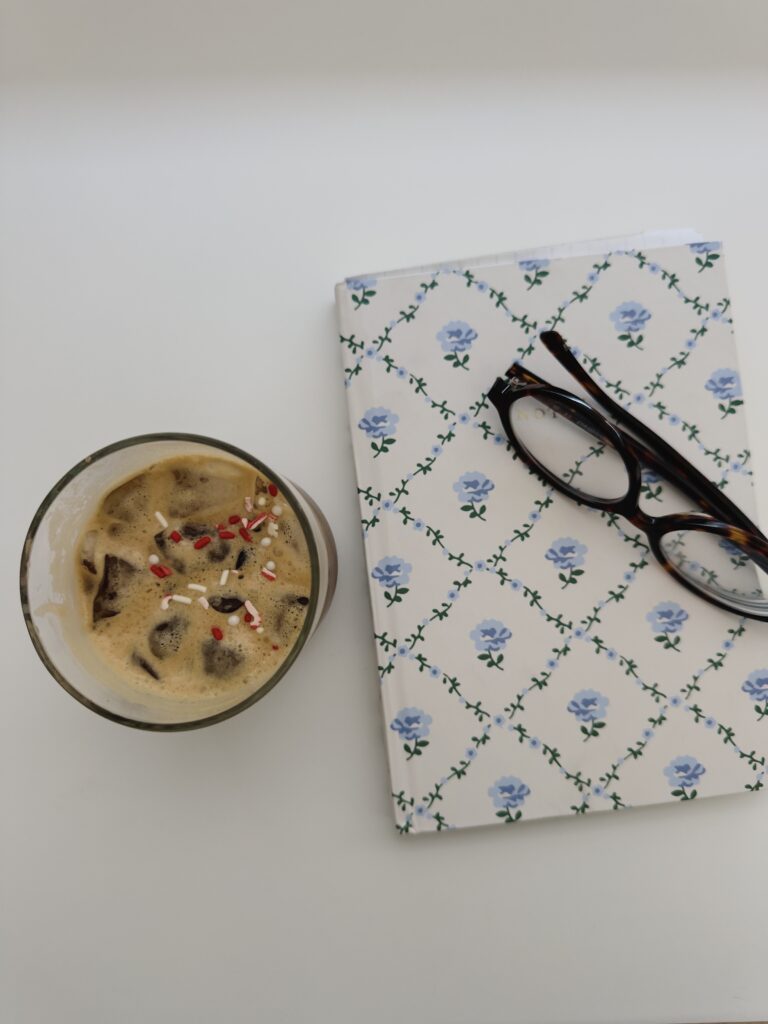
Sticky Notes: Used Sparingly, With Intention
Sticky notes can either save you or flood your space.
I still use them, but with strict rules. Only for:
- temporary reminders
- quick thoughts I don’t want to interrupt my study flow for
They never live permanently on my desk. Once their job is done, they’re removed.
This matters because constant visual reminders keep part of your attention activated, even when you’re not consciously reading them. Limiting sticky notes helps reduce background mental noise, something that’s especially important if you’re sensitive to clutter.
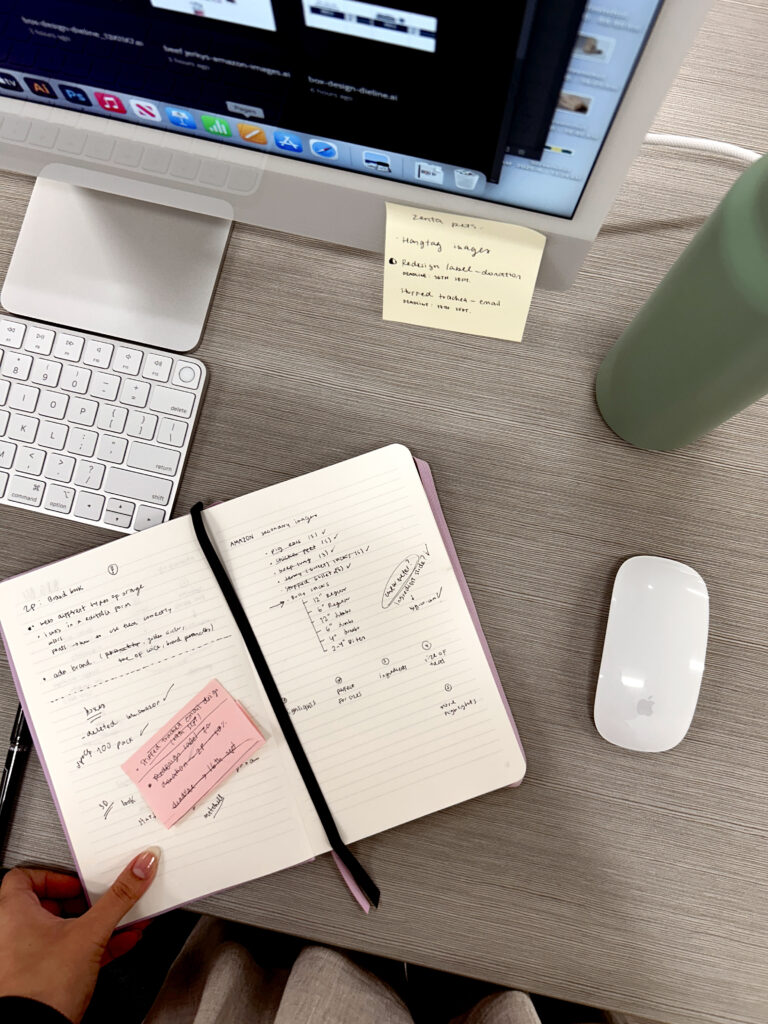
A Desk Organizer That Keeps Surfaces Clear
The single most underrated study supply: a desk organizer.
Not one with endless compartments, but one that quietly absorbs the small objects that would otherwise scatter across your desk. Pens, clips, highlighters, all visible, but contained.
There’s solid evidence that physical clutter competes with task-related attention. A clear surface isn’t about minimalism as a trend; it’s about giving your brain fewer decisions to make.
This is something I also explore in more depth in my article on desk organization essentials, because it’s often the difference between a space that looks nice and a space that actually helps you study better.
Final Thoughts
If you’re easily overwhelmed, studying isn’t about adding more tools, it’s about choosing fewer, better ones.
Everything I’ve mentioned here earns its place on my desk. Not because it’s aesthetic, but because it makes studying feel lighter. More intentional. More possible.
You don’t need to change everything at once. Start with one object. One notebook. One pen. One clear surface.
Sometimes, focus begins the moment your environment stops asking things from you and finally lets you think.