I found Deep Work at a moment of quiet frustration.
I was spending most of my days at university, dedicating long hours to studying, and yet my results never matched the effort. I felt like I had no time left for anything else, as if my entire life revolved around my degree and still, it didn’t feel like enough. That was the most exhausting part: doing “everything right” and constantly falling short of my own expectations.
Every time a new semester started, I promised myself it would be different. I would try again. I would be more disciplined, more motivated, more organized. And every time, I ended up in the same place, with the uncomfortable feeling that something in my system simply wasn’t working. I knew that studying for so many hours couldn’t be the only way but I didn’t know any other.
That frustration was what pushed me to start questioning not how I studied, but why it wasn’t working. I began to look closely at my habits, my environment, and the way I used my time. One of the very first steps in that process was reading Deep Work by Cal Newport.
Why I Picked Up Deep Work (Almost by Accident)
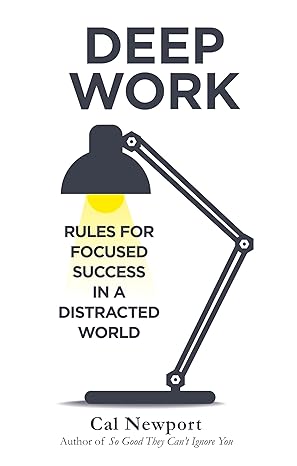
I didn’t discover this book through a recommendation list or productivity forums. I found it almost by chance. One afternoon, tired of repeating the same patterns, I walked into a bookstore with a very simple goal: find something that could help me study better without consuming my entire life.
I’ve never been a big fan of self-help books. I wasn’t looking for motivation or morning routines that promised to “change everything.” What I wanted was understanding, something grounded in how the brain works and how routines can be shaped to support it, not fight against it. When I saw Deep Work, the concept itself caught my attention. I didn’t even know what “deep work” meant yet, but the idea of focus as a skill felt different. More serious. More realistic.
That curiosity was enough to take it home.
My Life Before Deep Work: Constant Noise, No Direction
Before reading the book, my study days were mentally chaotic. I always felt like I had too many open tasks in my head at once. I studied with my phone nearby, which meant constant distractions. I procrastinated, not because I was lazy, but because I had no clear direction. I worked with notes from different subjects scattered around me, jumping mentally from one thing to another without ever fully committing to what I was doing.
I was busy all the time, but rarely focused.
Reading Deep Work didn’t magically fix everything, but it gave me something I had been missing: a name for the problem. For the first time, I understood that the issue wasn’t the number of hours I studied, but the quality of those hours. The concept of deep work (periods of intense, uninterrupted focus on a single demanding task) changed the way I saw studying altogether.

What Deep Work Changed for Me (In Practice)
The most important shift was simple but powerful: I started working in focused blocks.
Now, I dedicate one or two hours, preferably in the morning, to complete silence and full concentration. During that time, I work on one single task that actually matters: studying a difficult subject, writing, or thinking deeply about a problem. Nothing else is allowed on my desk. No phone. No extra notes. Just what I need in front of me.
This didn’t happen overnight. At the beginning, staying fully focused for an hour felt almost impossible. Some days I started with forty minutes. Other days, just thirty. I had to train myself to sit with my thoughts without constantly escaping to something else. Waking up early wasn’t easy either. I even tried doing my deep work sessions at night, but I quickly realized that by then I was too tired. The only moment of absolute calm for me was early in the morning.
Over time, those short sessions became more natural. And more importantly, they became effective.
Focus Is Not Only About Time, but About Space
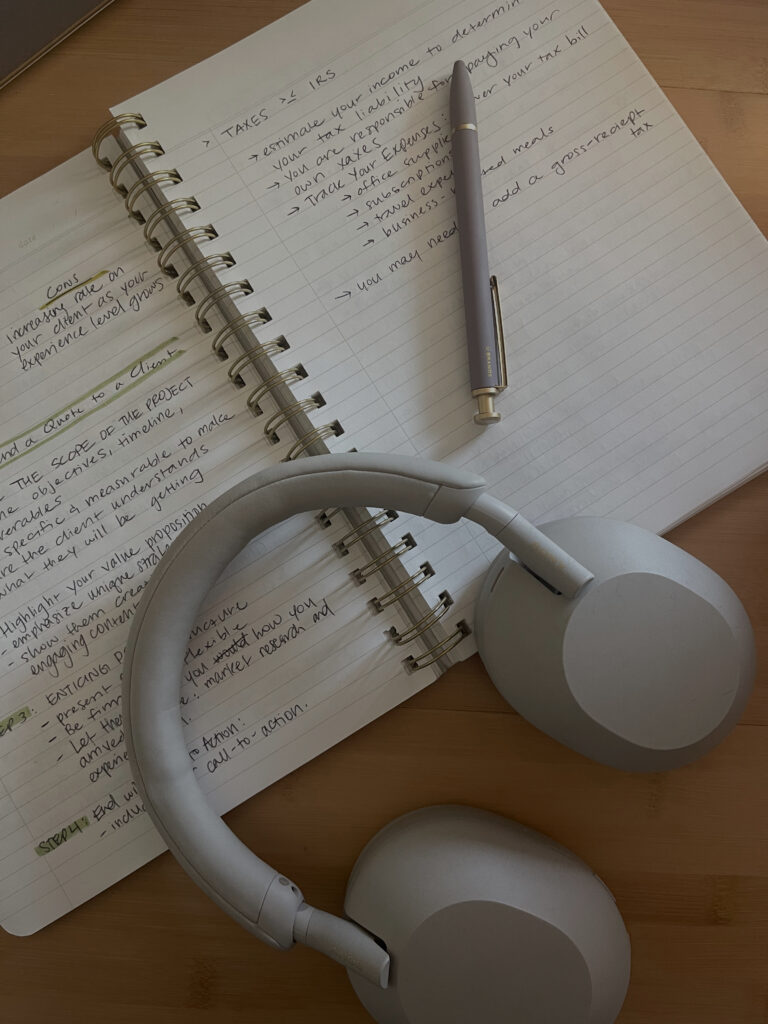
After reading Deep Work, I also started questioning something else: the environment in which that focused time happens. I realized that even the best routines fail if the space doesn’t support them.
This reflection led me to rethink my study environment completely: the difference between chaotic and calm spaces, and how much they affect concentration. I explore this idea in more depth in another article, where I share my personal experience with chaotic vs. calm study environments (you can read it here).
That realization also connects closely with another piece I’ve written about the five desk organization essentials I personally rely on. My planner, especially, has become fundamental. I’ve tried many methods over time, and I currently use a digital planner that helps me structure my days realistically, something I’ll talk about more in a future article.
The Science Behind It (Without Making It Heavy)
What I appreciate most about Deep Work is that it doesn’t rely on empty motivation. The ideas are supported by cognitive science: our brains are not designed for constant context-switching, and deep concentration is a skill that weakens when it’s not used. Research consistently shows that uninterrupted focus improves learning, memory consolidation, and the ability to work on complex tasks.
You don’t need to know all the studies to feel the difference. I certainly didn’t. I just noticed that when I protected my focus, my work improved and my mental exhaustion decreased.
Why I Genuinely Recommend Deep Work
This book was one of the first steps in my journey toward better organization and learning. It opened the door to new concepts and gave me something I desperately needed at the time: hope. Hope that with better study routines, it was actually possible to do everything I wanted without burning out.
I recommend Deep Work because it can be a starting point for changing the way you work, not by doing more, but by doing better. That said, I also think it’s important to be honest: there is a big difference between reading a book and applying what you learn.
If you’ve already read many productivity books, you might not need another one. You might need to act. Learning about focus without changing anything can become another form of procrastination. This book only works if you’re willing to experiment, fail, adjust, and try again.
For me, it was worth it.

Final Thoughts
Deep Work didn’t turn me into a perfectly focused person overnight. I’m still learning, adjusting, and modifying my system whenever I feel the need to. But it helped me step out of a cycle that wasn’t serving me anymore. It taught me that focus is not something you wait for, it’s something you build.
If you feel like you’re spending all your time studying but still falling short, this book might be the quiet shift you need. Not a miracle, but a beginning.



One comment on “Deep Work by Cal Newport: how I rebuilt my focus when studying was never enough”