For years, I thought being productive meant studying more hours. Longer days. More coffee. Less rest.
What I didn’t realize is that my study space was silently working against me.
Once I started organizing my desk intentionally, everything changed: I focused faster, felt less overwhelmed, and studied better without extending my study time.
Your desk is not just furniture: it’s an environment that shapes how you think, work, and show up every day.
These are the five essential organization products that completely transformed my study space and that I genuinely cannot live without.
1. A Good Desk Lamp: Your Energy Depends on Light

A desk lamp isn’t optional, it’s foundational.
Poor lighting drains your energy, strains your eyes, and makes studying feel heavier than it needs to be. Once I invested in a proper desk lamp with warm but clear light, I noticed I could stay focused longer without feeling exhausted.
Advantages
- Reduces eye strain and headaches
- Improves focus and alertness
- Creates a calm, aesthetic study environment
Disadvantages
- Cheap lamps often flicker or have harsh light
- Requires some desk space
2. Laptop Stand: Your Posture Is Productivity
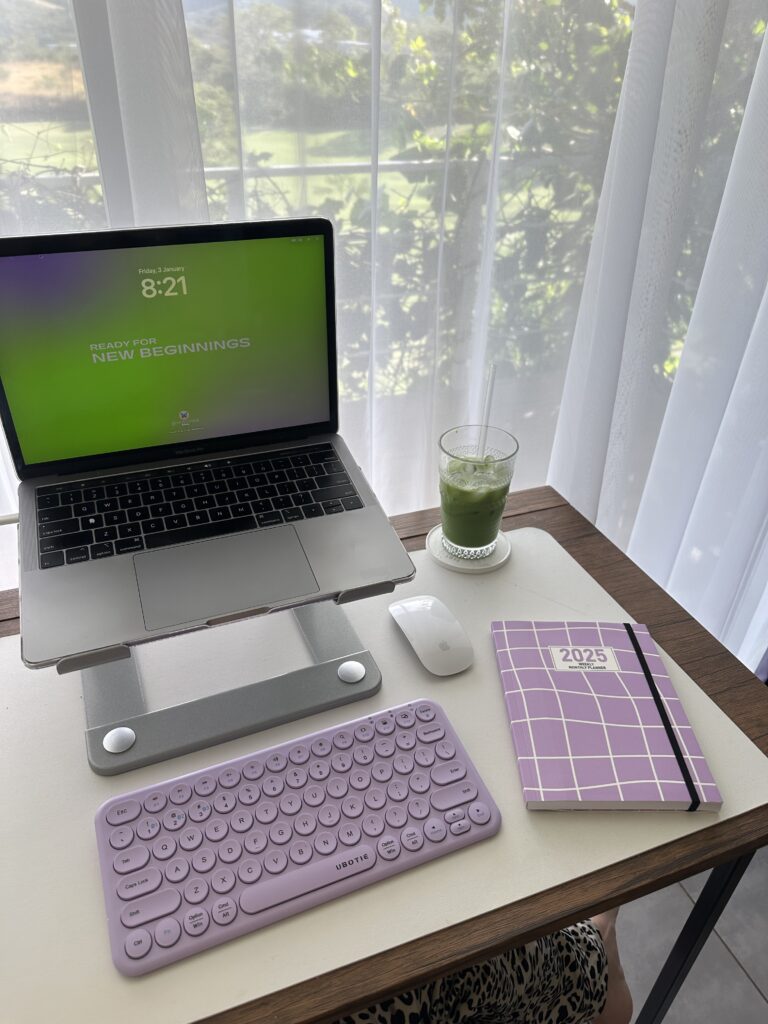
This is the upgrade most students ignore and the one that changes everything.
Studying with your laptop flat on the desk forces your neck and shoulders into an unhealthy position. Once I raised my laptop to eye level and added a keyboard, my posture improved instantly and so did my concentration. Physical discomfort creates mental distraction. If your body isn’t aligned, your brain can’t fully focus.
Advantages
- Improves posture and reduces neck/back pain
- Makes long study sessions sustainable
- Instantly elevates your desk setup
Disadvantages
- Requires an external keyboard and mouse
- Slightly less portable
3. Paper Organizer: Clear Desk, Clear Mind

Loose papers are visual noise.
Before I used a paper organizer, my desk always looked messy even when I was “organized.” Once every document had a place, my mind felt lighter. I stopped wasting time searching for notes and started studying with intention. Your brain processes clutter as unfinished tasks. A paper organizer removes that constant background stress.
Advantages
- Keeps important documents visible but controlled
- Saves time and mental energy
- Makes your workspace feel intentional
Disadvantages
- Needs regular maintenance
- Takes up vertical space
4. Cable Organizer: Eliminate Invisible Stress

Messy cables seem small until they’re not.
Tangled chargers create friction, frustration, and chaos. Once I organized my cables, my desk instantly felt cleaner, more minimal, and easier to work at. Your environment should reduce decision fatigue, not add to it.
Advantages
- Keeps your desk visually clean
- Protects cables from damage
- Makes setting up and packing faster
Disadvantages
- Easy to ignore until it becomes necessary
- Needs occasional re-adjustment
5. Headphone Stand: Respect Your Tools

Your headphones deserve their own space.
Leaving them on the desk or chair creates clutter and damages them over time. Once I added a headphone stand, my desk felt more intentional. When everything has a place, your workspace stays functional and calm.
Advantages
- Prevents damage to headphones
- Frees desk space
- Adds a clean, aesthetic touch
Disadvantages
- Only useful if you use headphones regularly
- Requires a small footprint
Final Thoughts: Your Desk Shapes Your Future
You don’t need to study longer.
You need a space that supports the person you’re becoming.
An organized desk isn’t about aesthetics it’s about clarity, health, discipline, and focus. Once you experience studying in a space that truly works for you, there’s no going back.
You don’t just organize your desk.
You organize your habits, your mindset, and your future.




2 Comments on “Transform your study space: 5 essential organization products”