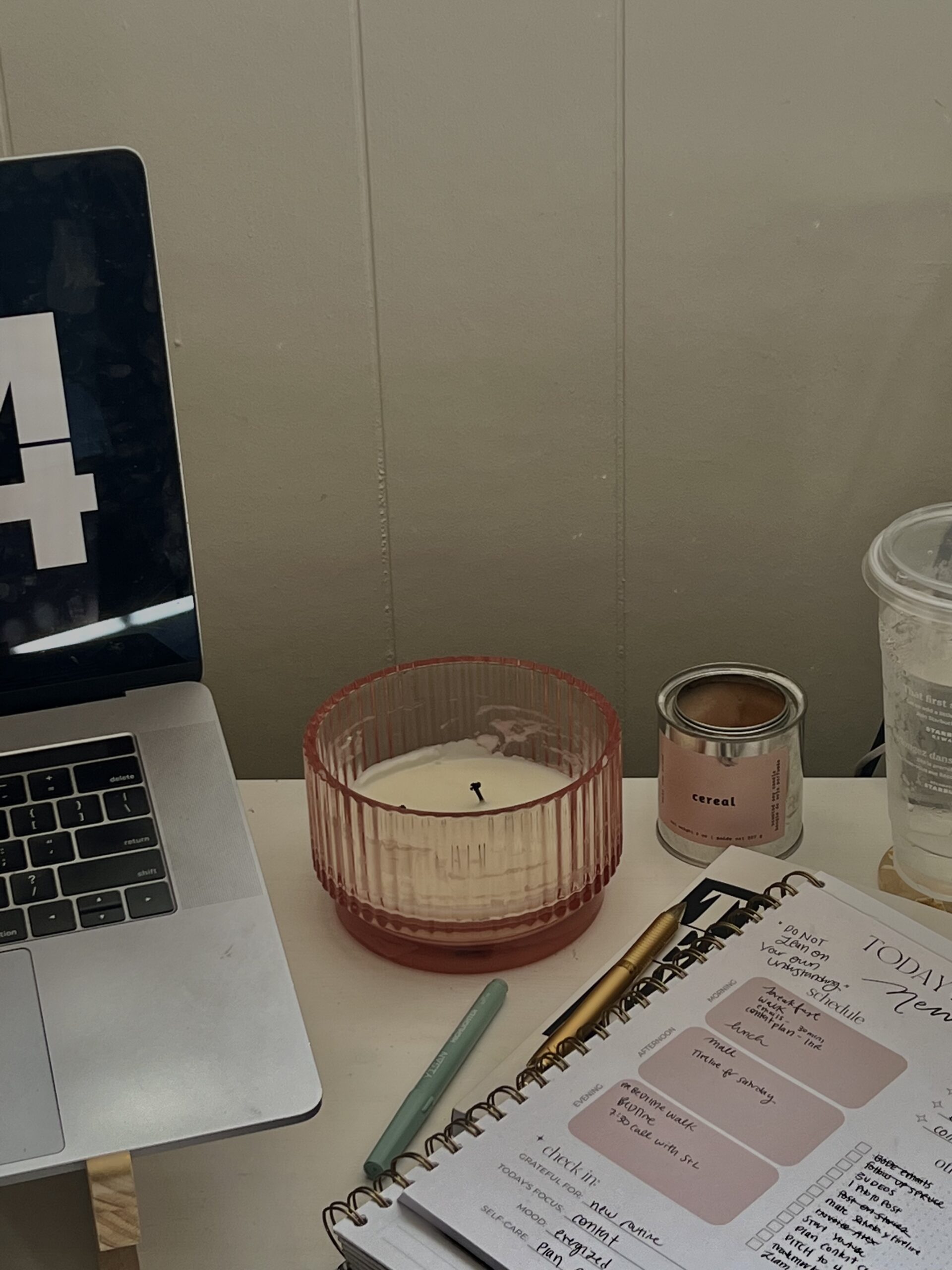
We often talk about study techniques, schedules, or productivity hacks, but there’s something much more basic that we tend to underestimate: the environment where we study.
Your brain doesn’t learn in a vacuum. It constantly processes everything around you, even when you think you’re “used to it”.
From a scientific point of view, learning requires mental resources that are limited. When your environment is chaotic, those resources get consumed before you even start studying.

Attention, Working Memory, and Cognitive Overload (in simple terms)
To understand why a calm environment matters, it helps to know three key concepts:
Attention is your brain’s ability to focus on relevant information and ignore the rest. Noise, movement, or visual clutter constantly compete for it.
Working memory is the mental space where you temporarily hold information while using it. For example, when you read a paragraph and try to understand it or connect it to something you already know. This space is very limited.
Cognitive overload happens when too much information (internal or external) tries to enter your working memory at the same time. When that happens, learning becomes inefficient, tiring, and frustrating.
A noisy or visually messy environment pushes your brain closer to overload before you even open your notes.
How Noise and Visual Clutter Interfere with Learning
Noise doesn’t just “annoy” you. Your brain automatically processes sounds to decide whether they’re important or not. Conversations, chairs moving, footsteps, or someone sitting down at your table all trigger small attentional shifts.
The same happens with visual clutter. An overcrowded desk: papers from other subjects, random post-its, empty cups, etc. sends constant signals to your brain. Some of them are neutral, others are stressful, especially when they remind you of unfinished tasks.
The result is:
- Faster mental fatigue
- Frequent distractions
- Difficulty retaining information
- A constant feeling of being overwhelmed
Even if you stay seated for hours, the quality of learning is much lower.

My Experience: Chaotic Spaces vs Calm Ones
For a long time, I studied in very large libraries where I had to share tables, deal with people talking, standing up, moving chairs, or making small but constant noises. I also didn’t pay much attention to my desk at home,it was often full of notes from other subjects, random papers, old to-do lists, and things that had nothing to do with my current study session.
I noticed a clear pattern: I felt mentally exhausted very quickly. I got distracted all the time, and I struggled to retain anything I had studied. Seeing notes from other subjects made me feel anxious, as if my brain was trying to process everything at once.
When I started studying in calmer environments, the difference was obvious. Natural light whenever possible, a well-lit desk, silence or very soft music, and using headphones to isolate myself made studying feel lighter. I didn’t need to “warm up” mentally as much.
The biggest change was that it became easier to sit down and start. My space was already clean and ready, so I didn’t have to waste energy organizing before studying. That alone made focusing much more natural.

Designing a Brain-Friendly Study Space
A calm study environment doesn’t have to be aesthetic perfection. It just needs to reduce unnecessary stimuli.
Small changes can make a big difference:
- Keeping only what you need for the current study session on your desk
- Using good lighting to reduce eye strain and mental fatigue
- Creating a sense of separation from distractions, even in shared spaces
Tools like noise-canceling headphones can help protect your attention in noisy environments. Desk organizers make it easier to avoid visual overload, while a good desk lamp supports focus when natural light isn’t enough. In shared rooms, even simple study room dividers can create a psychological sense of calm and personal space.
These aren’t productivity “luxuries”, they’re supports for how your brain actually works.

Learning Starts Before You Open Your Notes
Studying effectively isn’t just about discipline or motivation. It’s about creating conditions where your brain can do its job without unnecessary interference.
A calm environment reduces cognitive load, protects your attention, and allows your working memory to focus on what really matters: understanding and learning.
Sometimes, the most powerful study strategy is simply giving your brain some quiet.
For more science-based insights, language learning, and practical resources I truly use, you can join me on Substack.